


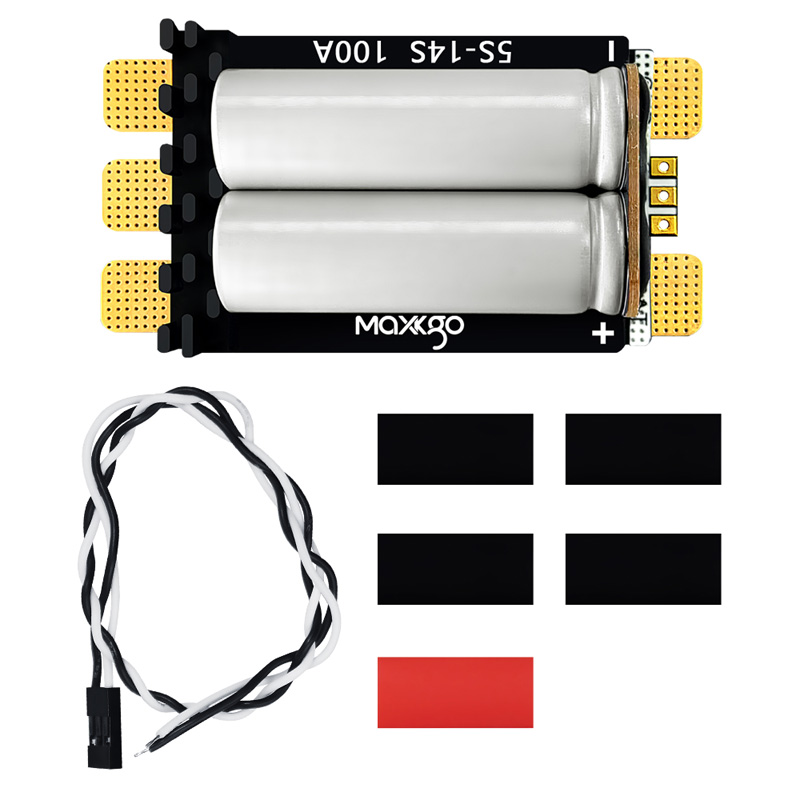
Choosing the right high voltage drone ESC is essential when you build a powerful UAV or FPV multirotor. An undersized electronic speed controller can struggle with high motor loads, generate excessive heat, or trigger protection mechanisms during demanding flight conditions. These problems can affect flight stability, power efficiency, and equipment reliability.
For drone manufacturers and professional UAV integrators, voltage compatibility, continuous current capacity, firmware flexibility, and thermal performance all matter. The MAXKGO 5-14S 100A brushless ESC addresses these requirements with support for 5S–14S LiPo batteries, 100A continuous current, and 130A burst current. Understanding these specifications helps you determine whether this controller fits your propulsion system and operating conditions.
What Is a High Voltage Drone ESC?
A high voltage drone ESC is an electronic speed controller designed to regulate brushless motor operation in drone propulsion systems using high-voltage battery configurations. It receives control signals from a flight controller and adjusts motor power by switching electrical current through the motor phases.
Unlike basic low-voltage controllers, a high voltage ESC must accommodate higher battery input voltages and demanding current loads. This makes it particularly relevant to large multirotor platforms, professional FPV drones, and UAV systems that require substantial propulsion power.
When evaluating a high voltage drone ESC, consider these essential specifications:
- Input voltage: Determines which battery configurations the ESC supports.
- Continuous current: Indicates the current the controller is designed to handle continuously under specified operating conditions.
- Burst current: Represents its short-duration current capability.
- Firmware compatibility: Determines configuration options and supported communication protocols.
- Protection functions: Help safeguard the controller against abnormal operating conditions.
MAXKGO 5-14S 100A Drone ESC: Key Specifications
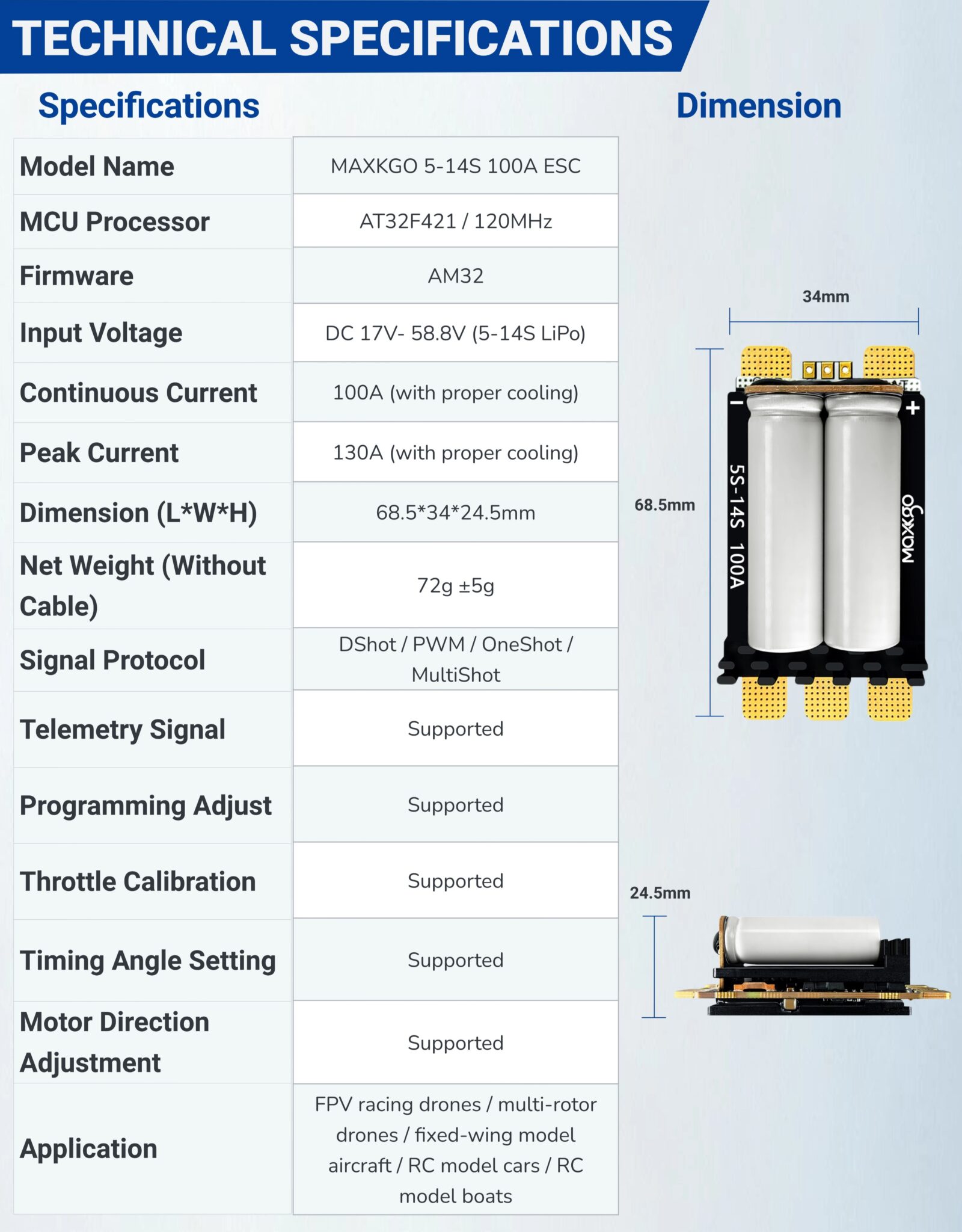
The MAXKGO 5-14S 100A ESC combines high-voltage battery compatibility with AM32 firmware support and an ARM Cortex 32-bit MCU. It is designed for drone propulsion systems and other compatible RC applications.
| Specification | MAXKGO 5-14S 100A ESC |
|---|---|
| Product Type | Brushless Electronic Speed Controller |
| Input Voltage | 5S–14S LiPo |
| Continuous Current | 100A |
| Burst Current | 130A |
| Firmware | AM32 Compatible |
| MCU | ARM Cortex 32-bit |
| Communication | DShot600 and supported protocols |
| Configuration | AM32 Configuration Tools |
| Applications | FPV, UAV, Multirotor, RC Car, RC Boat |
1. 5S–14S High Voltage Compatibility
The controller supports 5S to 14S LiPo battery configurations, providing flexibility when you design different propulsion systems. This voltage range allows UAV developers to select suitable battery configurations according to motor requirements, power consumption, and aircraft design.
However, you should always verify the ESC’s actual voltage limits against your battery’s fully charged voltage, rather than relying only on its nominal cell count.
2. 100A Continuous and 130A Burst Current
With a rated continuous current of 100A and a burst current of 130A, this ESC targets applications that require substantial motor power.
Continuous current capacity matters during sustained flight, while burst capacity is relevant when the propulsion system experiences temporary increases in demand, such as during acceleration or rapid maneuvering.
Actual current capability also depends on cooling, installation conditions, ambient temperature, and electrical system design.
3. AM32 Firmware and DShot600 Support
AM32 compatibility gives developers access to firmware configuration tools for supported operating parameters. The ESC also supports DShot communication, including DShot600, which provides a digital signal interface between compatible flight controllers and ESCs.
Its ARM Cortex 32-bit MCU provides the processing platform for motor control and firmware operation.
High Voltage Drone ESC vs. Standard Low Voltage ESC
Not every brushless ESC suits a high-power UAV. Comparing voltage compatibility, current ratings, and configuration capabilities helps you avoid selecting an unsuitable controller.
| Comparison Factor | MAXKGO 5-14S 100A ESC | Standard Low Voltage ESC |
|---|---|---|
| Battery Compatibility | 5S–14S LiPo | Depends on model |
| Continuous Current | 100A | Depends on model |
| Burst Current | 130A | Depends on model |
| Firmware | AM32 Compatible | Depends on model |
| Digital Protocol | DShot600 support | Depends on model |
| Target Applications | High-power UAVs, FPV and RC | Depends on model |
The main distinction is the MAXKGO model’s specified high-voltage input range and current ratings. When comparing alternatives, check actual manufacturer specifications rather than assuming that every low-voltage ESC has the same limitations.
How to Choose the Right 100A High Voltage Drone ESC
Selecting a 100A drone ESC involves more than matching the current rating to your motor. You should evaluate the complete electrical and mechanical configuration.
Follow these five steps:
Step 1: Confirm Your Battery Voltage
Identify your battery’s cell count and fully charged voltage. Make sure the ESC supports the entire voltage range, including the maximum voltage immediately after charging.
Step 2: Calculate Motor Current Requirements
Review the motor specifications, propeller configuration, and expected operating load. Check that the ESC’s continuous current rating provides sufficient capacity for your application.
Step 3: Evaluate Cooling Conditions
High-current operation generates heat. Consider airflow, mounting position, surrounding components, and enclosure design when planning ESC installation.
Step 4: Check Firmware and Protocol Compatibility
Confirm that your flight controller supports the ESC’s communication protocols. If you plan to use AM32 configuration tools and DShot600, verify compatibility across your control system.
Step 5: Review Protection and Testing Requirements
Check the available protection functions and request technical documentation covering operating limits, thermal behavior, and installation recommendations. Test the complete propulsion system under controlled conditions before deployment.
Where Can You Use a High Voltage Brushless ESC?
A high-voltage brushless ESC can support several applications, provided that the electrical specifications and mechanical requirements match the intended system.
- FPV Racing Drones: Suitable for compatible high-power propulsion systems that require responsive motor control.
- FPV Freestyle Drones: Supports multirotor configurations designed for dynamic flight maneuvers.
- Multirotor UAVs: Can be integrated into compatible quadcopter, hexacopter, and other multirotor platforms.
- Fixed-Wing Aircraft: Suitable for compatible brushless propulsion systems.
- RC Cars and Boats: Can serve as a motor controller in compatible RC configurations.
For commercial UAV development, you should also evaluate operating temperature, vibration resistance, electrical protection, and long-term testing requirements before selecting an ESC for production.
Why Consider MAXKGO for Drone ESC Solutions?
MAXKGO is a brand of Dongguan Daqianjin Technology Co., Ltd. Its technical background originates from the FLIPSKY team in 2017, which initially focused on DIY electric skateboarding and VESC-based electronic speed controllers.
Building on this experience in electronic control development, the company established the MAXKGO brand in 2021, focusing on high-voltage and high-current battery management systems.
In early 2025, MAXKGO expanded into drone electronic speed controllers, introducing 80A, 100A, 120A, and 200A product ranges.
The company’s development approach focuses on three areas:
- R&D Experience: Electronic control development and practical product testing.
- Product Quality: Manufacturing processes that include assembly and final inspection.
- Product Development: Continued development of BMS and ESC products for intelligent power and UAV applications.
This combination of battery management and electronic speed control experience provides a technical foundation for customers evaluating integrated power system components.
FAQ
1. What Battery Does a 5-14S 100A Drone ESC Support?
The MAXKGO 5-14S 100A ESC supports 5S–14S LiPo batteries. You should confirm the battery’s maximum fully charged voltage and ensure it remains within the controller’s specified operating limits.
2. What Is the Difference Between Continuous Current and Burst Current?
Continuous current refers to the current an ESC is designed to handle over sustained operation under specified conditions. Burst current refers to a higher current level that the controller can handle for a limited period. For this MAXKGO model, the ratings are 100A continuous and 130A burst.
3. Is the MAXKGO 100A ESC Suitable for FPV Drones and UAVs?
Yes. The product is designed for compatible FPV racing drones, freestyle drones, and multirotor UAVs. It also supports fixed-wing aircraft and RC applications. You should match the ESC’s voltage, current, firmware, and communication requirements to your specific propulsion system.
Conclusion
Selecting the right high voltage drone ESC requires careful consideration of battery voltage, continuous current, burst capacity, firmware compatibility, and cooling conditions. The MAXKGO 5-14S 100A brushless ESC offers 5S–14S LiPo compatibility, 100A continuous current, 130A burst current, ARM Cortex 32-bit MCU architecture, and AM32 firmware compatibility. These specifications make it a candidate for compatible high-power FPV drones, multirotor UAVs, and other RC propulsion systems.
If you are developing a UAV platform or sourcing a reliable electronic speed controller for your next project, evaluate the MAXKGO specifications against your motor and battery requirements before making a purchasing decision.
Contact MAXKGO to request detailed product specifications, confirm DShot600 and AM32 compatibility, and discuss your UAV or FPV propulsion requirements.
